



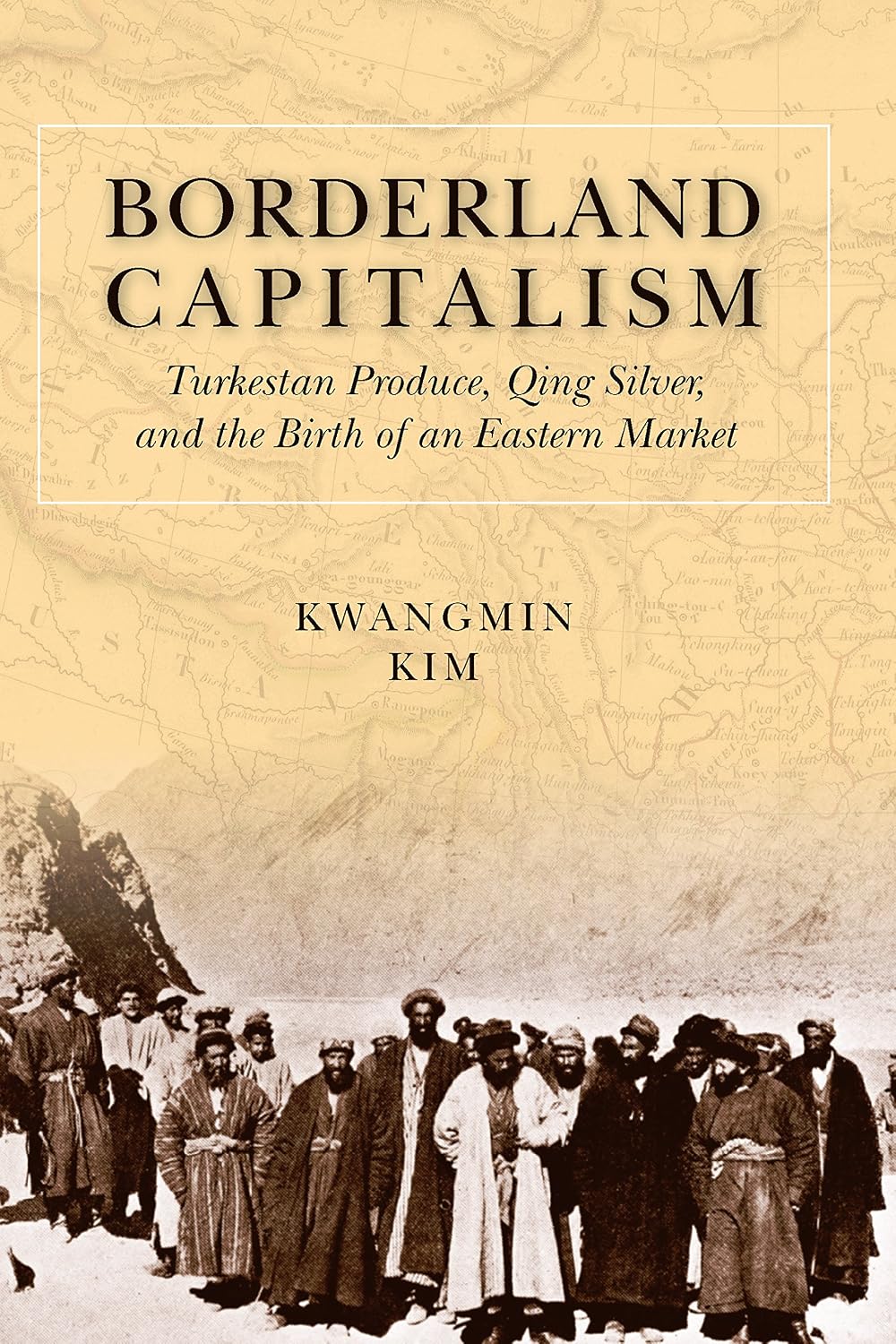
Borderland Capitalism: Turkestan Produce, Qing Silver, and the Birth of an Eastern Market

 4.7 (122 items)
 Limited Time Sale
US$28.96 cheaper than the new price!!
Free cash-on-delivery fees for purchases over $99
Product details
| Management number | 231915485 | Release Date | 2026/06/18 | List Price | US$19.31 | Model Number | 231915485 | ||
|---|---|---|---|---|---|---|---|---|---|
| Category | |||||||||
Scholars have long been puzzled by why Muslim landowners in Central Asia, called begs, stayed loyal to the Qing empire when its political legitimacy and military power were routinely challenged. Borderland Capitalism argues that converging interests held them together: the local Qing administration needed the Turkic begs to develop resources and raise military revenue while the begs needed access to the Chinese market.Drawing upon multilingual sources and archival material, Kwangmin Kim shows how the begs aligned themselves with the Qing to strengthen their own plantation-like economic system. As controllers of food supplies, commercial goods, and human resources, the begs had the political power to dictate the fortunes of governments in the region. Their political choice to cooperate with the Qing promoted an expansion of the Qing's emerging international trade at the same time that Europe was developing global capitalism and imperialism. Borderland Capitalism shows the Qing empire as a quintessentially early modern empire and points the way toward a new understanding of the rise of a global economy. Read more
| ASIN | B01L3VGTJ0 |
|---|---|
| XRay | Not Enabled |
| ISBN10 | 9781503600423 |
| ISBN13 | 978-1503600423 |
| Edition | 1st |
| Language | English |
| File size | 16.0 MB |
| Page Flip | Enabled |
| Publisher | Stanford University Press |
| Word Wise | Not Enabled |
| Print length | 397 pages |
| Accessibility | Learn more |
| Screen Reader | Supported |
| Publication date | October 19, 2016 |
| Enhanced typesetting | Enabled |
Bestseller ranking
Roller Seats


Customers who viewed this product also viewed
Economic History


Correction of product information
If you notice any omissions or errors in the product information on this page, please use the correction request form below.
Correction Request Form